Veneers
Veneers 101: What to Expect Before, During and After
Thinking about veneers? Here's what actually happens during treatment, how long they last, and the honest trade-offs between porcelain and composite options.
Cosmetic Dentistry
Custom-crafted porcelain veneers designed to correct imperfections and give you a smile you're proud to share.
Chips, stains, gaps, and uneven edges have a way of catching your attention every time you look in the mirror. Even small flaws can make you hesitate before smiling in photos or speaking up in a meeting, and over time that self-consciousness adds up. Veneers give us a precise, conservative way to correct these cosmetic concerns without reshaping your whole bite or committing you to months of treatment.
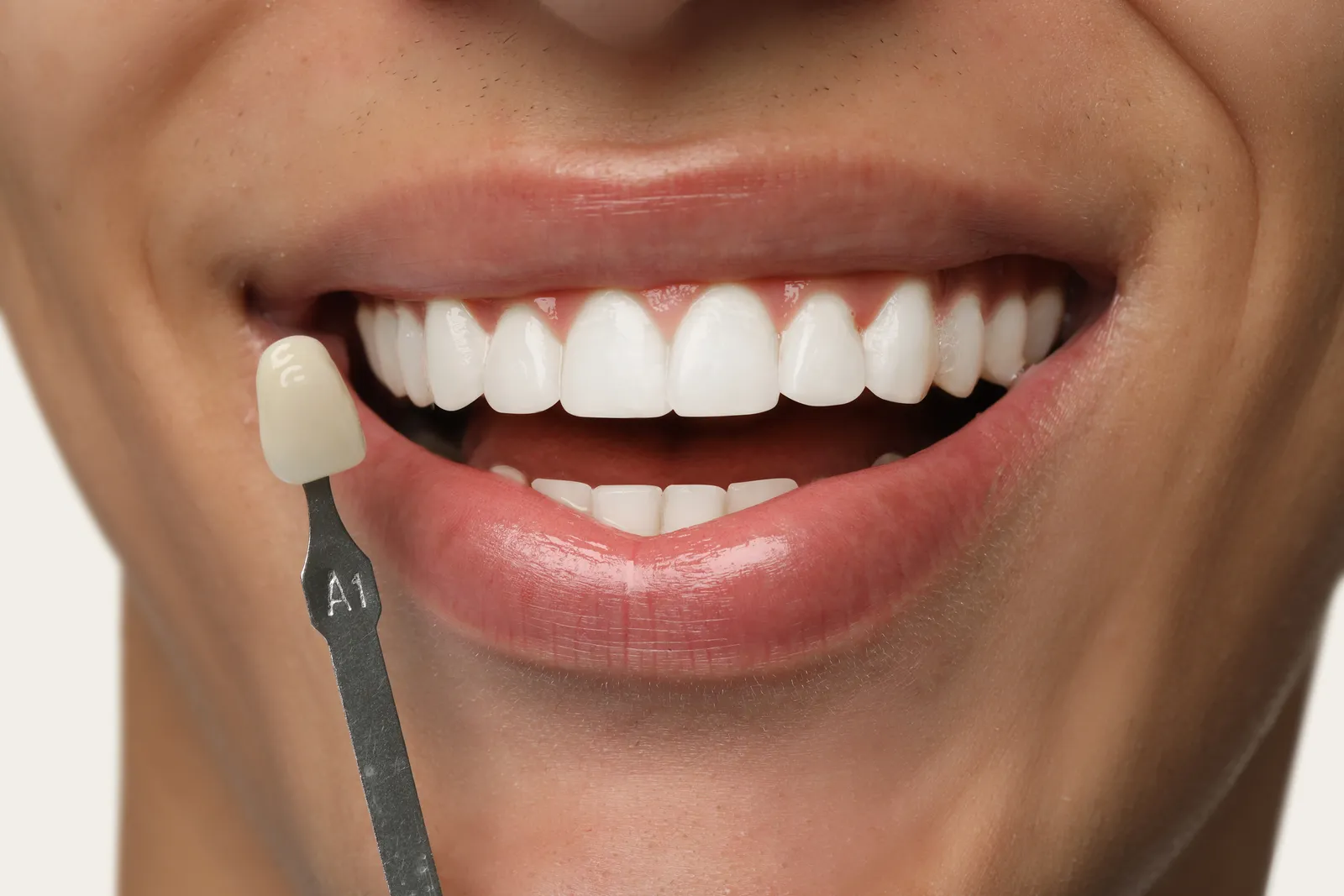
A veneer is a thin shell, typically made of porcelain, that's bonded to the front surface of a tooth to change its color, shape, length, or alignment. Unlike crowns, which cover the entire tooth, veneers preserve much more of your natural enamel while still delivering a dramatic visual improvement. At Crossroads Dentistry, we treat every veneer case as a custom design project, not a one-size-fits-all product, which means your results are shaped around your facial structure, your existing teeth, and the specific look you're after.
Before any shell is placed, we take time to understand what's actually driving your concerns, whether that's old discoloration that won't respond to whitening, a chipped front tooth from years ago, or spacing that's bothered you since childhood. That diagnostic conversation lets us recommend the right material, shade, and shape so your new smile looks like it belongs to you, not like it was borrowed from someone else.
Patients come to us with a wide range of cosmetic concerns, and no two smiles need exactly the same fix. Some of these signs may feel familiar, while others might surprise you as things veneers can actually address.
Many of these issues look minor on their own, but together they shape how your whole smile reads to other people. A thorough exam helps us confirm that veneers, rather than whitening, bonding, or orthodontics alone, are genuinely the best match for what you want to achieve.
Cosmetic concerns rarely come from a single cause. Understanding what's behind the appearance of your teeth helps us plan a treatment that looks natural and holds up over time.
Coffee, tea, red wine, and tobacco gradually penetrate enamel at a level that surface whitening can't always reach, leaving discoloration that keeps returning.
Some people are simply born with smaller, uneven, or irregularly shaped teeth, which is entirely normal but can still be a source of self-consciousness.
A fall, a sports injury, or biting into something unexpectedly hard can chip or fracture a front tooth in a way that's cosmetically obvious even when it's not painful.
Chronic grinding wears down biting edges over time, shortening teeth and creating an uneven smile line that becomes more noticeable each year.
Fluorosis, certain medications taken during tooth development, or high fevers in early childhood can leave permanent white or brown spots on adult teeth.
Gaps can develop from tongue position, tooth size relative to jaw width, or missing lateral teeth, and often persist even after braces.
Older composite bonding or discolored fillings in visible areas can stand out against surrounding enamel, especially after years of normal wear.
Veneer treatment is deliberate and collaborative. We take the time to plan each detail with you before any permanent change is made to your teeth.
We talk through what's bothering you about your smile, look at photos of smiles you like, and discuss realistic outcomes based on your natural teeth and facial proportions.
We examine your teeth and gums, take digital images, and check for any underlying decay or bite issues that need to be addressed before cosmetic work begins.
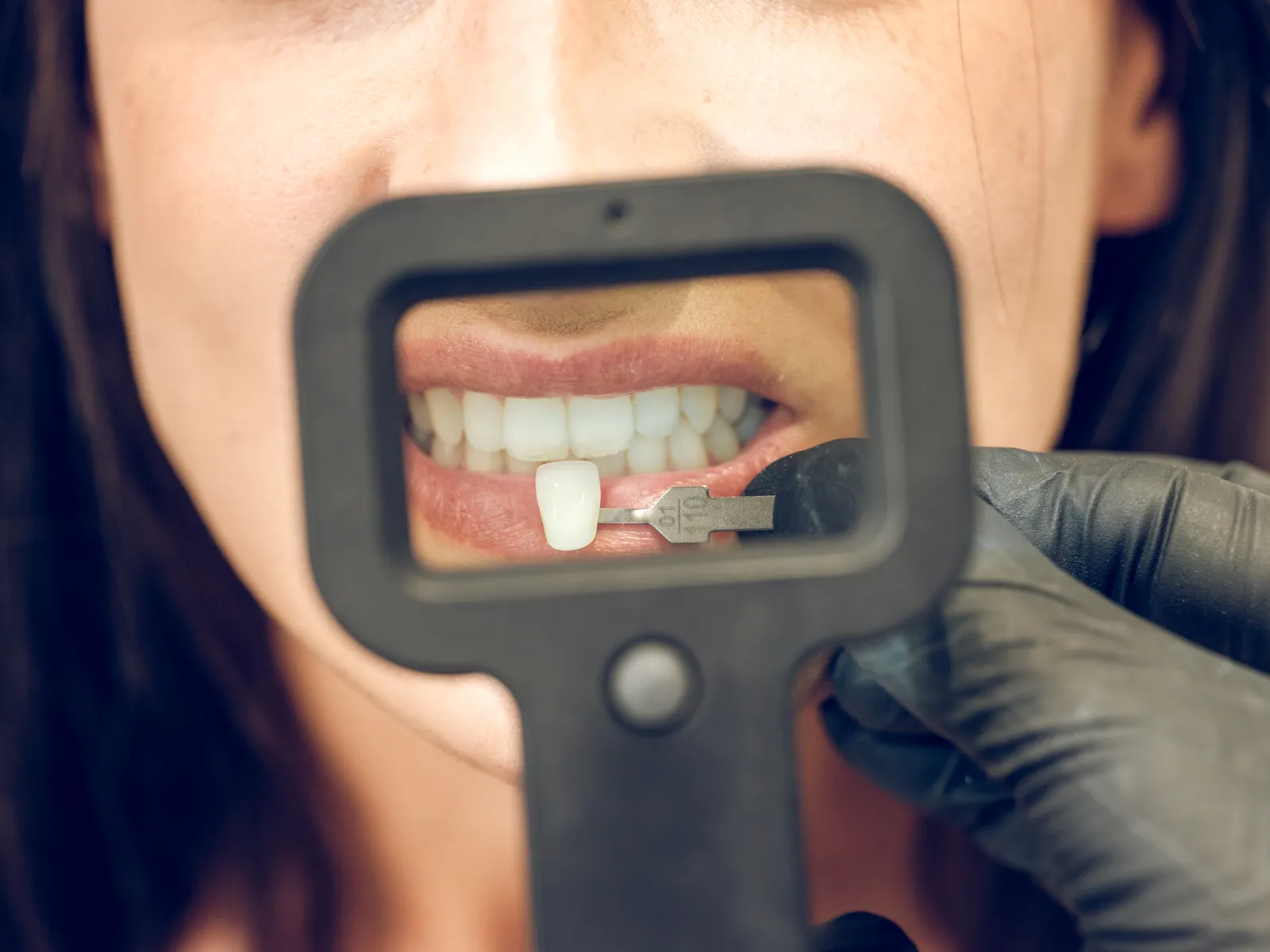
Together we select the shape, length, and shade of your veneers, then a small amount of enamel is gently prepared so the shells will sit flush and natural against your gum line.
While your custom porcelain veneers are crafted by a dental lab, you'll wear comfortable temporaries so you can preview your new smile and continue eating normally.
We bond your final veneers in place, check your bite carefully, and schedule a follow-up visit to confirm everything feels comfortable and looks exactly as planned.
Veneers do more than mask a flaw. Done well, they change how your whole smile presents, with results that hold up to close inspection and everyday life.
Porcelain is resistant to the staining that affects natural enamel, so your smile stays consistently bright for years without touch-up whitening.
Short, worn, or oddly shaped teeth can be rebuilt to a proportion that balances naturally with your lips, gums, and facial structure.
Spacing that's bothered you for years can often be closed in a few appointments instead of the months or years orthodontics would require.
Patients frequently tell us they smile more freely in photos, speak up more comfortably, and stop covering their mouth out of habit.
Not every veneer is created equal, and the difference usually comes down to material and preparation. Porcelain veneers are fabricated in a dental lab from ceramic that mimics the way natural enamel reflects light, which is why they tend to look more lifelike and hold their color better than composite resin alternatives applied directly in the chair. Composite bonding has its place for smaller, less complex corrections, but porcelain is generally the stronger, longer-lasting choice for a full cosmetic transformation.
Preparation technique matters just as much as the material itself. Removing too much enamel can weaken a tooth and make it more sensitive, while removing too little can make a veneer look bulky or feel unnatural against the gum line. We prepare each tooth conservatively, guided by digital imaging and a clear plan for the final shape, so the bonded shell sits exactly where it should without compromising the tooth underneath.
The bonding process itself is a precise chemical and mechanical union between the porcelain and your tooth structure. When it's done correctly, that bond is strong enough to withstand normal biting forces for well over a decade. That's why we pay close attention to bite alignment and contact points at the final fitting; a veneer that fits your bite properly is far less likely to chip or come loose down the road.
Veneers are durable, but a few everyday habits go a long way toward keeping them looking their best for years to come.
Use a non-abrasive toothpaste and floss gently around the edges of each veneer to prevent plaque buildup at the gum line.
Skip chewing on ice, pens, or fingernails, since sudden force on a veneer's edge is the most common cause of chipping.
If you clench or grind your teeth at night, a custom nightguard protects both your veneers and your natural enamel from excess wear.
Porcelain resists stains well, but rinsing with water after coffee, tea, or wine helps preserve the surrounding natural teeth's shade.
Regular professional cleanings remove buildup that a toothbrush can't reach and let us check that each veneer's margin is still secure.
If a veneer feels loose, sharp, or different in any way, call us promptly rather than waiting for your next scheduled visit.
These habits protect your investment, but they're not a substitute for regular professional checkups. Only an in-office exam can catch small issues before they turn into bigger repairs.
"I was nervous about committing to something permanent, but the team walked me through every option and never rushed me. My veneers look like my teeth, just the best version of them."
Answers to the questions we hear most often about porcelain veneers at Crossroads Dentistry.
BOOK YOUR VISIT
Join the CA 92563 families who trust Crossroads Dentistry. New patients and emergencies are always welcome.