Dental Implants
Dental Implants: Cost, Procedure and Recovery Explained
Considering dental implants? Here's what actually happens during treatment, how long it takes, what it costs, and how to know if you're a good candidate.
Restorative Dentistry
A permanent, natural-feeling way to replace missing teeth, restoring your bite, your confidence, and your everyday comfort.
Losing a tooth changes more than your smile. It changes how you chew, how your other teeth shift over time, and how comfortable you feel speaking or laughing in front of other people. Whether you lost a tooth to decay, injury, or gum disease, the gap left behind puts extra strain on neighboring teeth and can gradually affect your jawbone's shape and density. Dental implants address the problem at its source by replacing the entire tooth, root included, rather than simply covering the gap.
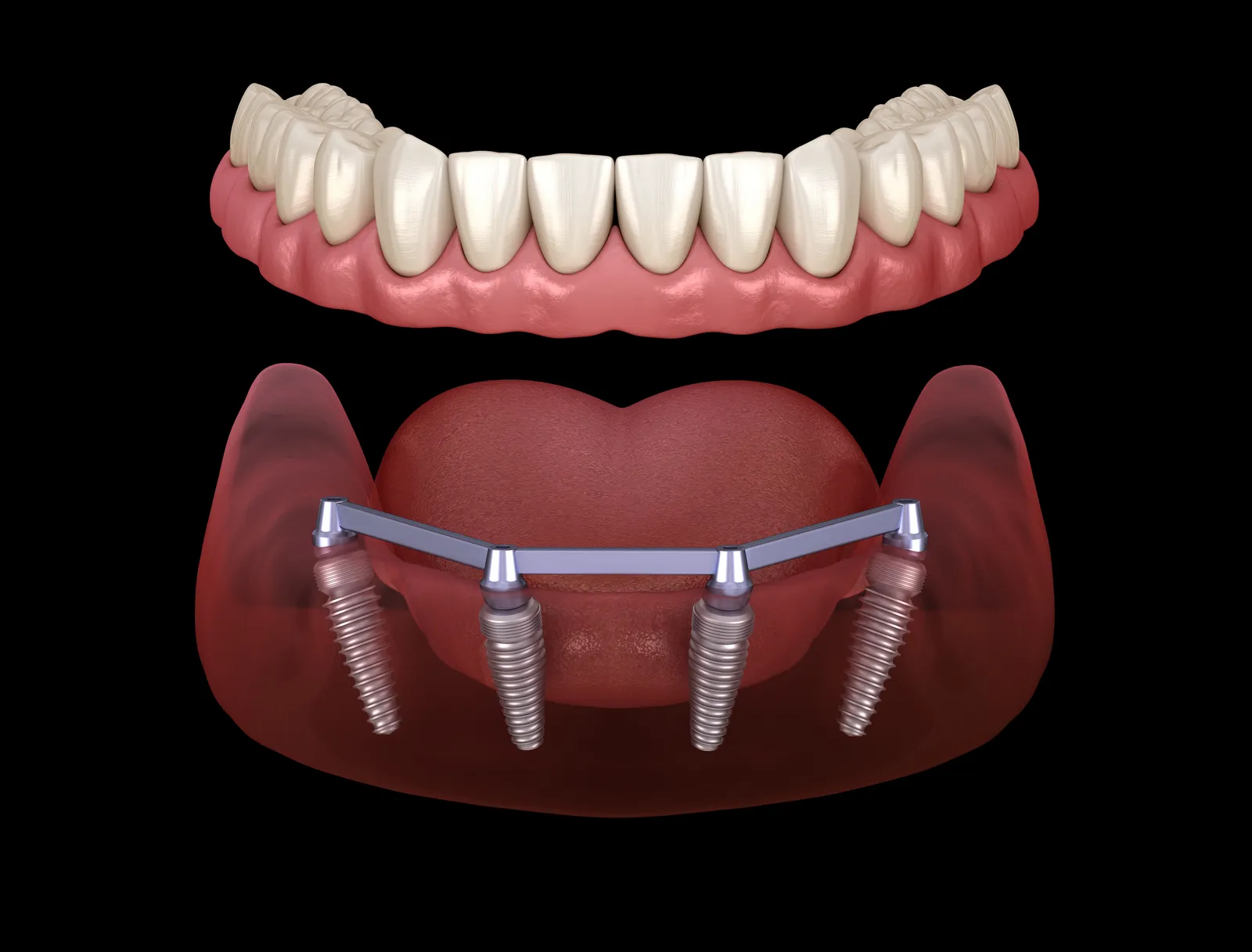
A dental implant is a small titanium post placed into the jawbone, where it fuses with the bone over several months in a process called osseointegration. Once that foundation is secure, we attach a custom-crafted crown that matches the size, shape, and color of your natural teeth. The result functions like a real tooth: you can bite into an apple, chew on both sides of your mouth, and brush and floss normally without special maintenance routines.
At Crossroads Dentistry, we start every implant case with a thorough evaluation of your jawbone, gum health, and bite before recommending treatment. We walk you through what to expect at each visit, address any anxiety about the procedure, and build a plan that accounts for your schedule, budget, and long-term oral health goals. Our aim is a replacement tooth that feels like yours, not an appliance you have to think about every day.
Not every missing tooth situation looks the same, and the right time to consider implants varies from patient to patient. These are some of the most common reasons people come to us asking about implant treatment.
If any of these situations sound familiar, it's worth having a conversation with our team before the gap causes further bone loss or shifts your bite in ways that are harder to correct later.
Understanding why a tooth was lost helps us plan a stronger, more lasting implant outcome. Most cases involve one or more of these contributing factors working together over time.
Periodontal disease breaks down the bone and tissue that hold teeth in place, which is one of the leading causes of adult tooth loss we see in practice.
Deep cavities left unaddressed can reach the tooth's nerve and eventually destroy enough structure that extraction becomes the only option.
A sports injury, fall, or accident can fracture or knock out a tooth instantly, often requiring an implant to restore both function and appearance.
Chronic bruxism wears down enamel and places repeated stress on tooth roots, which can eventually lead to fracture or loosening.
When a tooth is removed and not replaced, the surrounding bone begins to shrink within months, which is why timely implant placement matters.
Tobacco restricts blood flow to the gums, slowing healing and making both gum disease and tooth loss more likely over time.
Conditions like uncontrolled diabetes can affect healing and gum tissue health, increasing the risk of tooth loss if not carefully managed.
Implant treatment happens in carefully sequenced stages, each giving the bone and tissue time to heal properly. Here's what the journey typically looks like at Crossroads Dentistry.
We talk through your dental history, your goals, and any concerns about the procedure, then answer every question before moving forward.
Digital X-rays and a full oral exam help us assess bone density, gum health, and the exact placement location your implant will need.
We map out every step, including whether bone grafting is needed first, and give you a clear timeline and realistic cost breakdown.
The titanium post is placed under local anesthesia, and your jawbone spends the following months fusing securely around it before we proceed.
Once healed, we attach a crown matched to your natural teeth, then schedule follow-up visits to confirm it's functioning exactly as it should.
Implant treatment is designed to give you back full, lasting function rather than a temporary fix you'll need to revisit in a few years.
Because the implant fuses with your jawbone, it supports bite force the way a natural tooth root does, so you can eat the foods you enjoy without hesitation.
Your crown is custom shaded and shaped to match the teeth around it, so people notice your smile, not that you've had any work done.
Unlike a bridge, an implant doesn't rely on neighboring teeth for support, which means those teeth stay untouched and structurally intact.
The implant post stimulates the jawbone the same way a natural root would, helping prevent the bone loss that typically follows tooth extraction.
Gaps or ill-fitting dentures can cause whistling or slurred words; a fixed implant stays firmly in place so your speech stays steady.
With consistent oral hygiene and routine checkups, a well-placed implant can serve you reliably for twenty years or longer.
An implant is only as strong as the bone it sits in. When a tooth has been missing for a while, the jawbone in that area naturally begins to shrink because it no longer receives the stimulation that chewing and biting provide. This is why patients who wait years before replacing a missing tooth sometimes need a bone graft before an implant can be placed securely.
During your evaluation, we use digital imaging to measure the exact height and width of bone available at the implant site. If bone volume is insufficient, we can often rebuild it using grafting material that encourages your own bone to regenerate over several months. This extra step adds time to the process, but it significantly improves the long-term stability of the implant once it's placed.
The good news is that once an implant is successfully integrated into healthy bone, it continues to stimulate that bone indefinitely, the same way a natural tooth root does. That ongoing stimulation is one of the biggest reasons implants outperform bridges and dentures over the long run: they don't just replace the visible tooth, they protect the bone structure underneath it.
Implants don't decay like natural teeth, but the gum tissue and bone around them still need consistent care to stay healthy for the long haul.
Clean along the gumline around your implant crown just as carefully as you would a natural tooth to prevent plaque buildup.
Food particles can collect beneath the crown, so daily flossing or a small interdental brush helps keep that area clean.
Ice, pens, and hard candy can chip or stress a crown just as they would a natural tooth, so it's best to avoid them.
Regular visits let us check the surrounding gum tissue and confirm the implant remains stable and free of any irritation.
If you grind your teeth at night, a custom nightguard can protect both your implant crown and your remaining natural teeth.
Smoking slows healing around implants and raises the risk of gum inflammation, so cutting back supports longer-lasting results.
These habits go a long way toward protecting your investment, but they work alongside, not instead of, professional evaluation and care from our team.
"We've seen how much a missing tooth can hold people back, whether it's avoiding photos or steering clear of certain foods. Watching a patient bite into something they've avoided for years, without a second thought, is why we do this work."
Answers to the questions we hear most often from patients considering dental implants.
BOOK YOUR VISIT
Join the CA 92563 families who trust Crossroads Dentistry. New patients and emergencies are always welcome.